
The Underwater Test: Why You Should Test Your Equipment After a Flood
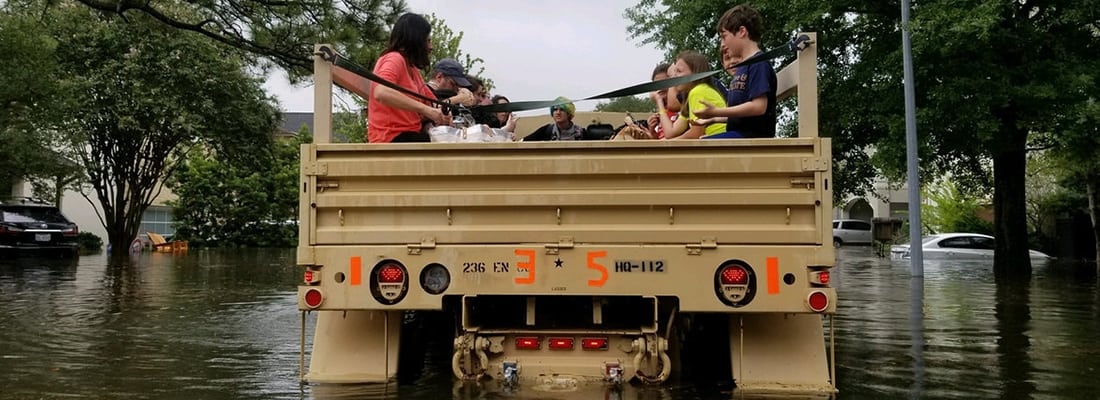
Sometimes it’s hard to plan for destructive natural disasters – such as Hurricane Harvey along the Texas and Louisiana Gulf Coast and the subsequent flooding. So, what do you do if your equipment is exposed to the disaster’s effects and flooding?

Based on years of experience in helping companies save their equipment and extend the equipment’s lifecycle, quite simply we recommend taking action.

Flooding can result in water contamination and can cause corrosion and oxidation which can be extremely harmful for your equipment and, in turn, can cause holds in production and loss of business. How will you know if you need to test your equipment’s fluids to see if any damage was caused and determine if potential maintenance is needed?

First, check for signs of water ingression or leaking. Search for answers to key common challenges, such as:

  • Is the high-water mark above the containers?
  • Is dried mud crusted on the container?
  • Are caps, lids and vents still in place?
  • Are desiccant filters saturated?

After you check for signs of water ingression, the next steps for testing depend on the type of fluid:

Oils and Lubricants

Check the fluid itself for signs of water contamination. A milky appearance indicates the oil additives have emulsified as much water as they could, and there is likely more dissolved in the fluid. An oil analysis test from POLARIS Laboratories® includes a water test, and elemental analysis can identify dirt contamination from mud or salt from sea water.

Coolants

Pressure caps on coolant containers typically prevent floodwaters from entering cooling systems. However, it is still worth the time to perform a field test using a refractometer or paper test strip to determine if the glycol/water ratio is still in balance. If you suspect contamination, a coolant analysis test from POLARIS Laboratories® will determine if the external water and dirt requires the cooling system to be drained and/or flushed.

Bulk Tanks

Bulk tanks typically have water drain-off ports to remove free water that settles to the bottom of the tank, but the fluids should be checked for water as well as using the techniques above. A “thief bomb” or “bacon bomb” may be needed to collect the sample. Diesel fuel and new lubricant testing from POLARIS Laboratories® will determine if the fluid quality is adequate for future use.

It’s crucial for any contaminated oils, coolants or diesel fuel to go through analysis testing when flooding occurs. Testing can prevent future issues from arising and can help determine what equipment maintenance is needed to resume work.

Proven Impact. Proven Uptime. Proven Savings.
Let us prove it to you.
Published September 6, 2017

Testing Your Oil Conditions

Contamination, component wear and fluid degradation make oil changes necessary. However, we have a choice when to change it.

Maintenance managers can set oil drains based on the equipment manufacturer’s recommendations, but that doesn’t necessarily account for unique environmental conditions. A heavy duty diesel engine on a piece of mobile equipment at a surface mine has different operational conditions than the same engine model in a standby power generation application. Oil analysis from POLARIS Laboratories® provides the scientific data to determine if a drain is necessary or if the drain interval can be extended.

But oil analysis by POLARIS Laboratories® covers more than just extending drains. Tests can determine abnormal component wear and fluid degradation. Here are a few of the oil conditions that are measured through our oil testing:

  1. Wear Metals: Components wear as they operate. This wear debris is abrasive and will beget additional component wear as the abrasive particles are circulated via the lubricant. The quantity and type of metal in the lubricant can identify how much wear is occurring and which part is wearing.
  2. Viscosity:  A measure of the lubricant’s resistance to flow at temperature. It is considered the most important property of a lubricant because it indicates film strength. Lubricants need to be within a certain viscosity range to provide adequate lubrication and prevent wear.
  3. Water Content: The amount of water contamination present. Water causes component corrosion and is a catalyst for oxidation.
  4. Soot: Particulate created as a by-product of incomplete combustion. Excessive soot levels will cause abrasive component wear.
  5. Fuel Dilution: Amount of unburned fuel in the lubricant. Excessive fuel dilution lowers the flash point and the viscosity, which results in friction-related wear.
  6. Acid Number: Used to measure the relative amount of acids in the lubricant, which can lead to lubricant degradation, and the potential for increased component wear.
  7. Base Number: A measure of a lubricant’s alkaline reserve, which can indicate the ability to neutralize acids.
  8. Oxidation: A way to measure the breakdown of the lubricant due to age and operating conditions. Oxidation promotes the formation of acids, which leads to lubricant degradation, and the potential for increased component wear.
  9. Nitration: Degradation that occurs when nitrogen oxides react with the lubricant primarily from ventilation (blow-by). Nitration leads to formation of sludge and varnish.

Of course, these are basic tests. Many different types of tests are available for special lubricant types or to gather more information on contamination found by another test.

Oil testing is even more helpful when the lubrication is used with other in-line fluids, such as coolant and diesel fuel. Engines use all three fluids, and a problem with one can affect another. Adding coolant analysis and diesel fuel analysis will uncover problems that would normally go undetected with oil analysis alone.

Proven Impact. Proven Uptime. Proven Savings.
Let us prove it to you.
Published May 2, 2017

Identify Issues Early

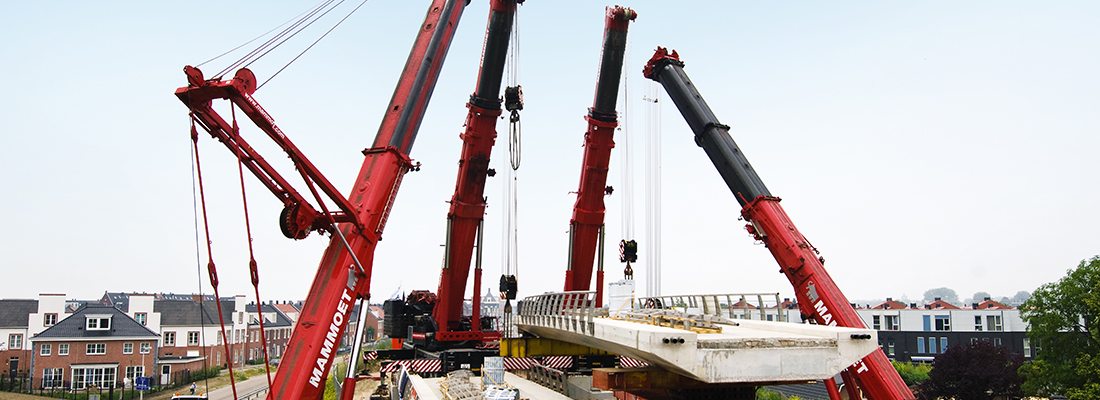
It is important to identify maintenance issues early. Mammoet, a specialist in lifting, transporting, installing and decommissioning large and heavy structures, experienced this firsthand when it noticed issues with a large crane during operation.

The company, focused on equipment uptime, preventive maintenance and sustainability, have made reliability a critical component of the business. With this pivotal focus on operational efficiency, the company turned to fluid analysis to help diagnose the problem with the crane and ensure the essential piece of equipment operated efficiently.

Read the full case study.


Proven Impact. Proven Uptime. Proven Savings.
Let us prove it to you.
Published April 11, 2017

We’re at ConExpo!

What makes ConExpo different than all other trade shows? Size! With over 2,500,000 square feet of exhibition space, it can be difficult to find your way around. Don’t let that be your excuse for not stopping by the POLARIS Laboratories® booth!

To help you find your way, visit our ConExpo page. There, you’ll find a map of Bronze Hall that’ll lead you straight to Booth B92713.

Our team has put together a number of true stories that we look forward to sharing with you. Make sure you take a moment to ask our team how they:

  • Saved a major equipment dealer $75K on a brand new transmission
  • Decreased a Fortune 500 company’s cost of repairs by 40%
  • Helped a leading coal company decrease its critical fluid analysis reports by 15%

We look forward to addressing these and any other questions you may have! For those of you not attending, contact us at getstarted@polarislabs.com to stay connected.

Proven Impact. Proven Uptime. Proven Savings.
Let us prove it to you.
Published March 8, 2017