
A Program Snapshot: HORIZON® Management Reports for Lube Marketers

The HORIZON data management system is robust in all that it can provide to a fluid analysis program. Team training is conducted on features like the Dashboard, Reading a Sample Report, Equipment List Management, Mobile App and Sample Submission – which are all important for program success. But, one feature of HORIZON that is often underutilized or undertrained is Management Reports. These reports provide lube marketers and program champions an overview of their fluid analysis program and provides specific areas for improvement.

There are twelve management report options in HORIZON. This means you can view twelve different sets of data in different areas of your program. For lubricant marketers specifically, the information provided in these reports can provide a look at how distributors and end users are utilizing their fluid analysis programs offered through the lube manufacturer.

Out of the twelve reports, there are three that I believe have significant value when it comes to information lube marketers are looking for: Program Condition, Turnaround Time and Severity Summary. A lubricant marketer can use the information provided in these reports as a touchpoint by sharing a snapshot of the overall program. This ensures the loyalty and pride in their product and the information provided will show that their distributors and end users are successfully monitoring the condition of their equipment.

Program Condition Report
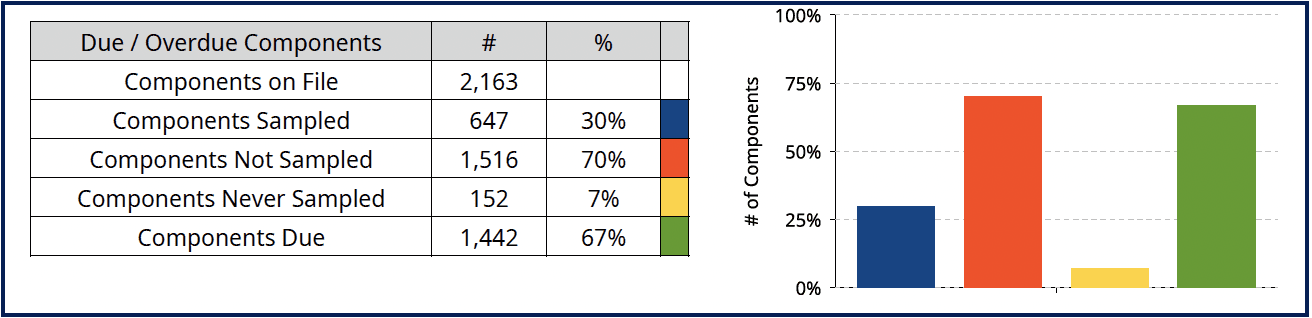
When reviewing the first section of the Program Condition Report, components due/overdue, you can see if the equipment is being tested and if the integrity of equipment is still in tack. The program condition data tells you if the team is being compliant and testing regularly – and it can be the starting point to set a trackable goal.

Turnaround Time Report

The Turnaround Time Report is crucial to program success, too. The information provided in this report reassures the laboratory is meeting their goal and the samples are getting to the laboratory within five days of sample being collected.
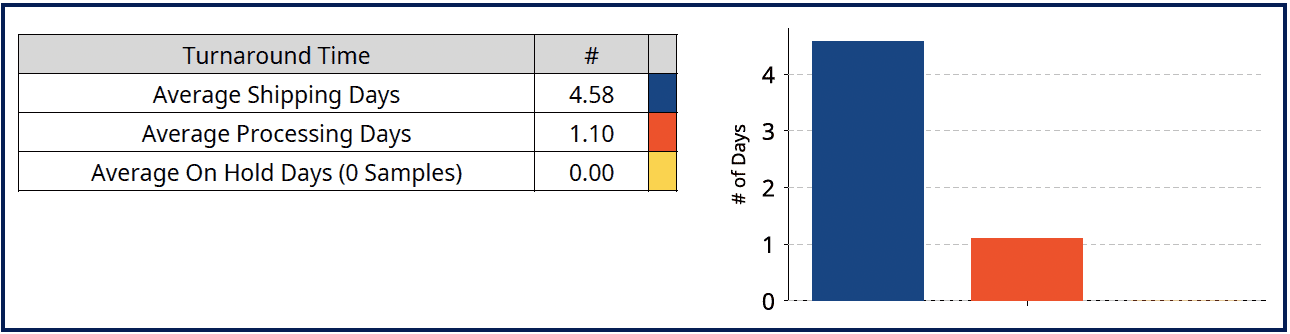
The report helps identify areas of improvement, for example, shipping challenges. The graph provides a topic of conversation that some folks may not think about: the importance of getting samples to the laboratory as soon as possible to get results fast and avoid any potential downtime.

Severity Summary Report

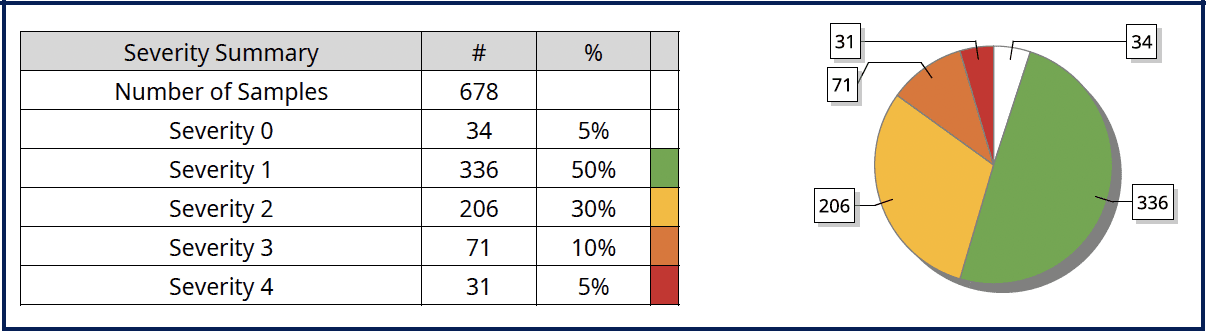
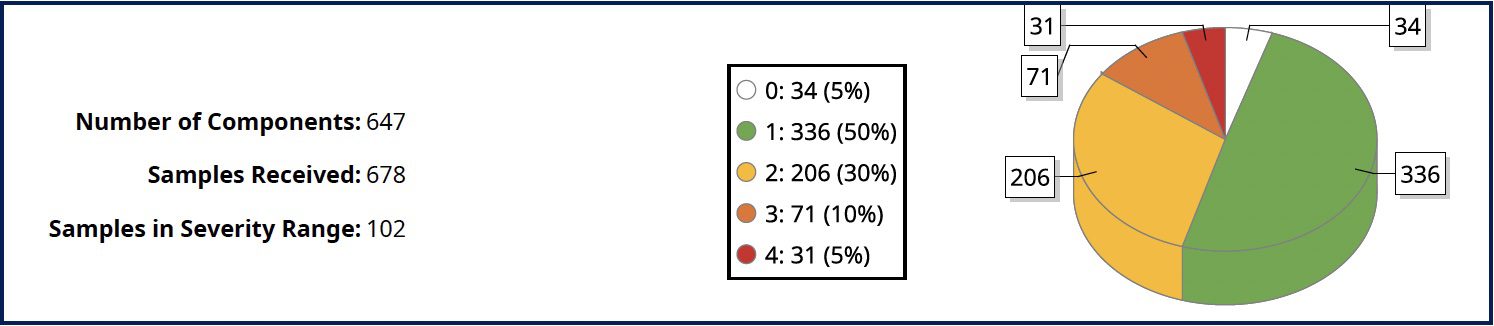
The Severity Summary Report will help identify trending of the results, either up or down. This allows the users get in front of a potential problem and help identify some actions that needs to be taken. This opens up a discussion of the lubricants and where some improvements can be made.
 

If you are a lubricant marketer, I encourage you take a look at the management reports HORIZON offers. These reports make it easy to get a high-level overview of your customers, distributors and end users’ use of their fluid analysis program. If you need assistance, reach out to your account manager!

Proven Impact. Proven Uptime. Proven Savings.
Let us prove it to you.

Published July 15, 2022

Will You Accept Your Reliability Mission this October?

The maintenance and reliability world is rapidly progressing with technology advancements and new digital solutions to integrate programs and data. We’re committed to help you, our customer, leverage these new advancements and innovations and achieve optimal equipment reliability.

Mission: Reliability, the 7th-annual Customer Summit, will focus on providing you the tools, resources and education so you can bring your program full circle.

Experience a Summit Like No Other

Mission: Reliability, taking place in Indianapolis October 3-5, will be unlike any Customer Summit to date or maintenance conference in the industry. Attendees will gain a full circle experience and see all aspects of maintenance and equipment management; from the lubricant manufacture, to the original equipment manufacturer, to the oil analysis provider, to seamless integration solutions.

In addition to keynote speakers, general and breakout sessions, workshops and networking, POLARIS Laboratories® has partnered with Allison Transmission and Cummins, to provide additional education and tour opportunities for Summit attendees. These exclusive OEM tours include:

  • Allison Transmission
    • Innovation Center (Indianapolis, IN)
    • Electrification and Environmental Center (Indianapolis, IN)
  • Cummins
    • Technical Center (Columbus, IN)
    • Augmented and Virtual Environment Lab (Columbus, IN)

During these tours, Mission: Reliability attendees will get a first-hand look at manufacturing and technology innovations these OEMs are putting in place to prepare for the future of equipment reliability.

We’re excited to bring these additional learning experiences to this year’s attendees and hope you will join us for Mission: Reliability in October. Will you accept your mission?

Proven Impact. Proven Uptime. Proven Savings.
Let us prove it to you.

Published June 9, 2022

Open the Valve to Data-Rich Samples

Regularly sampling the oil, coolant and diesel fuel circulating within your systems used for power generation is vital to ensure the smooth and efficient operation of these systems when they are required to be used, either for back-up or permanent power.

It’s All in the Sample

Taking regular, representative samples is critical to guaranteeing accurate, actionable fluid analysis test results are determined. This helps assess the condition of your fluids and if any maintenance is required to ensure uptime of the equipment when needed.

Want to Get an Accurate Sample Every Single Time AND Save 5 Minutes Per Sample? 

Of course you do! Using sample ports and valves ensures that representative samples are taken from all systems, each and every time by confirming that the fluid extracted is representative of the bulk fluid circulating within the unit. As well as providing the ‘best sample possible’, using sample valves also significantly reduces the time and labour required when taking samples. Studies show that using sample valves instead of traditional vacuum pump and tubing method reduces the sample collection process by up to 5 minutes per system. Samples can also be taken safely whilst the equipment is running which further enhances the quality of the sample.

There’s a Valve for You

Valves can be retro-fitted to fit any system and we’re here to provide guidance on the optimum valve required for the component. In addition, we help determine the valve location for any system to ensure the best possible sample can be taken. POLARIS Laboratories® can also provide you with a valve ROI calculator to demonstrate the potential cost savings of installing and using valves for your fluid analysis program.

Make the switch today and benefit from opening the valve on labour cost savings and increases in data-rich samples.

Contact us to start installing sample valves on your equipment.

Proven Impact. Proven Uptime. Proven Savings.
Let us prove it to you.
Published August 3, 2021

Identifying and Tackling Particle Contamination

The most common cause of equipment failure is particle contamination. This includes external contaminants, such as dirt or sand, as well as the microscopic pieces of metal generated during equipment operation.

The following tests can further investigate the size and shape of the particles to help your team discover the source of the contamination and assess the damage to the component:

  • Atomic Emission Spectroscopy (AES-ICP):
    • Elemental analysis (usually performed by an ICP) can identify the most common wear and contamination elements and quantify the concentration of contamination, with a size limitation of particles less than 8 to 10 micron in size, but other typical oil analysis technology can provide additional information of the sizes and type of contamination.
  • Particle Count
  • Particle Quantifier
    • This technology will determine ferrous contamination without a size limitation. And when used in conjunction with AES-ICP when comparing PQ results with ICP results the severity of ferrous particles present can be understood. The ICP will detect the smaller sizes and the Particle Quantifier result greater than ICP would indicate larger particles are present.
      Further testing can investigate the size and shape of the particles to help maintenance personnel discover the source of the contamination and assess the damage to the component
    • See the multiple techniques to quantify particles
  • Microscope Analysis

Each test takes a slightly different approach to this task, and each have their own limitations.

Thankfully, not every method should be included in every circumstance. Recommended tests vary based on type of equipment, equipment criticality, and operating cycles. POLARIS Laboratories® is here to help you choose the best, most cost effective testing for your application. Reach out today for assistance on selecting to correct method for each of your equipment to provide the best information to catch concerns early overall increasing your ROI.

Proven Impact. Proven Uptime. Proven Savings.
Let us prove it to you.

Published April 7, 2021

Ensure Uptime During Times of Emergency

With the recent demand and reliance on back-up power generators as a result of 1) the global pandemic and 2) inclement weather forcing us to work from home more, this puts stress on the power grid as well as the internet connectivity now more than ever. Ensuring your back-up power generators are reliable and up and available when you need them is crucial during these times.

Here are some key points to help provide you with guidance on what to look for in our power generation systems, not limited to just engines, but the whole system. Monitoring radiator and coolant performance and fuel quality are keys to ensuring continuous uptime without any unexpected failures or run time issues.

Maintenance Tips To Perform During Each Preventive Maintenance:
  • Visual | Check the system gauges, sensors, hoses, thermostats, breathers and filters for any abnormalities, loss of pressure, damage/missing breathers or filters. Check exhaust for white or black smoke and overheating
  • Audible | Listen for any abnormal knocking, vibrations or air leaks. This may lead to performing pressure test checks on both the coolant and engine. These tests may result in further troubleshooting (pressure test checks, vibration analysis or data sensor review)
  • Smell | Coolant leaks can often lead to a sweet smell – this can be the glycol. Burnt smells can be from both coolant and engine oil. Also check for signs of strong diesel fuel or fluid leaks from hoses, radiator, head gaskets and injectors
  • Fluid | Check for emulsion (a milky lacey appearance) and visible water and/or oil or separation of fluid types. This can indicate fluid contamination
  • Visible Debris | Check for any type of flakes, flocculent, debris, wear, dirt, microorganisms or filter media in the fluid. A magnet can be used to see if the debris is magnetic. In coolants/fuels this can indicate corrosion in radiator or fuel tanks and in engines wear
Why Test All Three Fluid Types?

All three fluid types (oil, coolant and diesel fuel) run within your system in sync. If any one component type isn’t running up-to-par, it will put stress on the other components leading to a snowball effect of failures. These can easily be prevented by putting in place preventive measures to minimize failures, incur maintenance/part costs and down time. Here’s why:

  • OEM’s have stated roughly 40 percent of engine failures are due to cooling systems
  • Roughly 80 percent of premature engine failures are traced back to cooling system issues that could have been corrected by coolant sampling
  • Poor diesel fuel maintenance can result in fuel injector failures, filter plugging, smoking and loss of power
  • Dirty fuel can lead to injectors leaking fuel into the crankcase causing lubricity issues for the lubricant and increasing engine wear
  • Poor cold weather fuel properties can also lead to fuel gelling, cold filter clogging and engine failures
  • Engine and coolant overheating can place stress on the coolant system causing a chemical reaction within the coolant properties
  • Engine and lubricant overheating has a negative impact on the lubricant. Increasing the oxidative life of the oil results in  the inability to protect the engine from wear while keeping it clean.
Using the Right Fluid

Oil | Checking your engine oil will ensure the engine is not experiencing any type of abnormal wear, contamination or oil degradation. This keeps the engine running longer and prevents overheating – resulting in a longer engine life cycle.

Coolant | Ensuring that you are using the right OEM-specified coolant is the first step. Make sure to test the coolant properties yearly for signs of degradation, checking that the coolant properties are still within range and what corrections/adjustments need to be made to the formulations.

Diesel Fuel | Making sure diesel fuel properties meet ASTM D975 requirements (learn more about ASTM D975 here), during the summer and winter months is key. The fuel needs meet the quality specifications will save you on any engine related issues.

Proven Impact. Proven Uptime. Proven Savings.
Let us prove it to you.

Published March 3, 2021

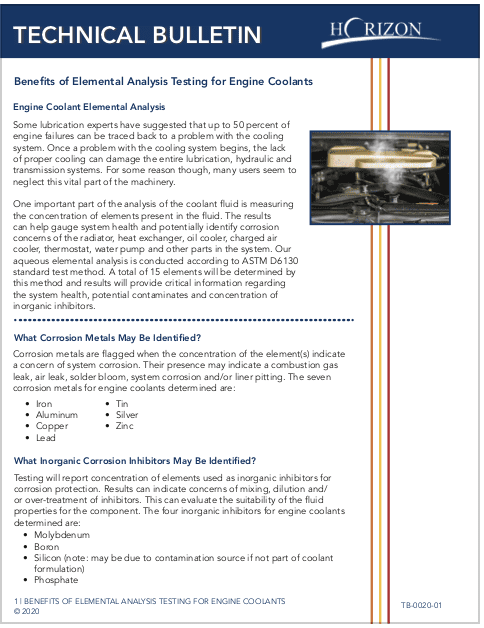
Elemental Analysis Testing: Add it to Your Engine Coolant Report

Is Elemental Analysis Testing Included in Your Engine Coolant Report?

Do you get a physical every year? How about a routine blood test? Elemental Analysis is similar to having your blood drawn for a yearly physical. Just as the bloodwork will provide more details to your physician on how your body is functioning, the elemental analysis testing will provide more details on the equipment’s overall system health. If elemental analysis testing isn’t included in your routine fluid analysis, information regarding corrosion/wear, contamination and certain fluid properties will not be able to be monitored. Cooling system concerns are a leading factor to how well the equipment effectively can perform. Adding elemental analysis testing will identify corrosion, mechanical issues, contamination and other possible fluid properties in the sample.

With majority of engine failures traced back to cooling system, predominantly due to overheating events, proper coolant analysis testing should be performed on all samples. When proper testing is not included, the missing information will hinder the laboratory’s maintenance recommendations as the possible root cause for concerns may not be identified. Ultimately, not identifying the root cause will lead to higher downtimes and engine failures.

How to Add Elemental Analysis

Reach out today to review if your fluid analysis program includes the proper testing that will best benefit your program. Including elemental analysis testing within your program will help identify if concerns are present in the cooling system. When specific issues are identified correction can be performed to reduce further potential damage to the equipment. Elemental analysis testing should be included on all samples submitted to the laboratory as this testing will provide critical information regarding the equipment’s overall system health. Catching early system concerns and performing proper corrections will assist with maintaining proper cooling system function reducing unexpected downtimes and engine failures.

Check out our Technical Bulletin to find out more information on the Benefits of Elemental Analysis Testing on Engine Coolants. 

Download the Technical Bulletin

Proven Impact. Proven Uptime. Proven Savings.
Let us prove it to you.

Published October 8, 2020

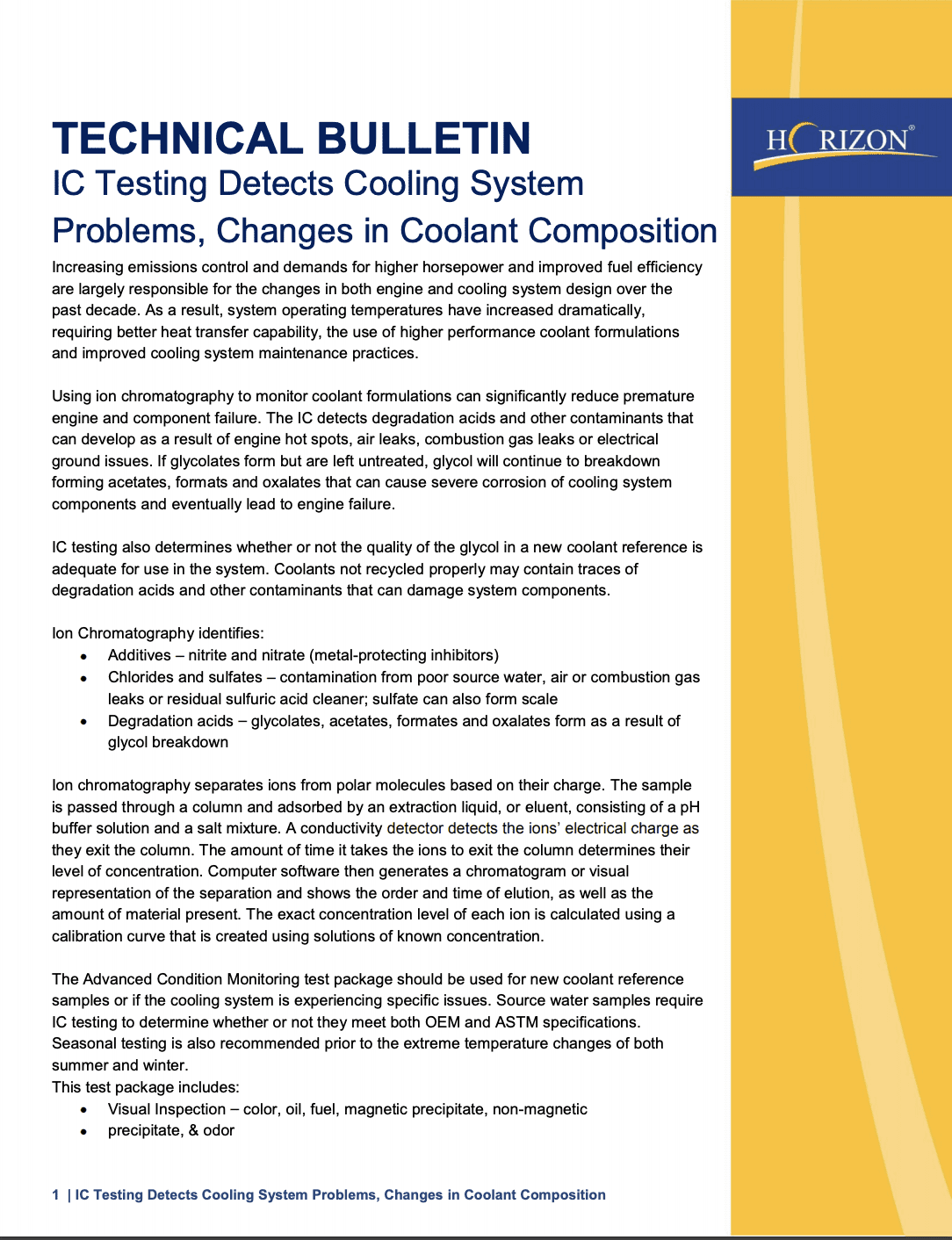
Ion Chromatography Testing Can Catch Cooling System Concerns Early

Have you received a recurring action on your coolant analysis report? Are you noticing recurring concerns with your pH, corrosion metals, and/or inhibitor depleting rapidly? Have you ever topped off the system with water only?

With basic coolant testing a piece of the puzzle to help identify the root cause of the concern in the cooling system may be missing. Basic testing will identify concerns and provide recommendations however, there may still be more going on in the system that basic testing will not identify.

Why Should Advanced Ion Chromatography (IC) Coolant Testing Be Added?

The advanced Ion Chromatography (IC) testing will determine glycol degradation, contamination and coolant inhibitors of nitrate, nitrite and possibly phosphate. IC testing will provide additional valuable information regarding your cooling system health.

IC testing will help find concerns with:

  • Hot spots (plugging of the system)
  • Combustion gas leaks
  • Electrical ground issues
  • Contamination concerns

Each concern above will cause a chemical reaction within the cooling system, resulting in failure overtime. Approximately 40% of engine failures can be traced back to a concern in the cooling system. Including IC testing to your routine coolant analysis program will provide more information on what is going on in the cooling system. Concerns can be caught early allowing for scheduled down time and less engine failures due to the cooling system.

What are Glycol Degradation Acids?

Degradation acids will form when ethylene or propylene glycol chemically breakdown. When degradation acids are present further glycol breakdown will occur as the acids present will act similar to a catalyst causing further glycol degradation over time.

Causes for degradation acids:

  • Localized overheating
  • Restriction of coolant circulation
  • Low coolant pressure
  • Mechanical concerns
  • Age of fluid

Degradation acids will hinder the coolant properties over time and may result in a decrease of the coolants ability to protect the metals in the system. Identifying the root cause is key to maintain the fluid and equipment. 

What Contamination Concerns can be Found?

Ion Chromatography will indicate contamination of chloride and sulfate. Chloride and sulfate are a concern if present in the system. Chloride can form hydrochloric acid, decarbonizes iron and is extremely corrosive. Sulfate can form sulfuric acid and combined with calcium to form scale in the system.

Causes for contamination:

  • Water source not meeting specification
  • Combustion gases
  • Air leak
  • Flush water left in system

Sulfate, when trending with prior history, can find an early combustion gas leak concern in the cooling system before an action is indicated on your lubricant analysis report. The coolant analysis will actually catch the concern and action can be made before a significant amount of coolant can mix with the lubricant leading to further engine wear.

Chloride contamination could be due to a venting concern allowing outside air to enter the system. Both chloride and sulfate can be present in a water that does not meet specification. Just a quick top off with water can cause a failure over time.

Catching contamination early with Ion Chromatography testing will provide the proper actions needed to correct the source of contamination before corrosion and/or chemical reactions occur harming the metals in the engine.

Are there benefits of reporting Nitrite and Nitrate?

Nitrite and nitrate may or may not be part of the coolant formulation as a corrosion inhibitor. The Ion Chromatography method is a more accurate method to determine nitrite concentration. The inhibitor if present, should be maintained for proper corrosion protection. Results can find concerns of low inhibitor, or mixing if inhibitor levels are not consistent with a new fluid reference. Trending both inhibitor levels can detect early concerns of chemical reactions, such as an electrical ground issue where nitrite could convert to nitrate.

Reach out today! Add Ion Chromatography testing to your program.

Advanced coolant testing will provide more details of possible chemical reactions occurring in your equipment and/or finding the root concern of recurring high severities found during basic coolant testing. Trending results from IC will provide more information on the fluid and find possible mechanical concerns in the cooling system. Catching system concerns early will help keep the cooling system functioning correctly and reduce unscheduled down times increasing your return of investment.

Check out our Technical Bulletin to find out more information on how Ion Chromatography (IC) Testing works:

Click to Download

Proven Impact. Proven Uptime. Proven Savings.
Let us prove it to you.

Published August 26, 2020

What To Do if You Have a Coolant Leak

So, you’ve received your oil analysis report back recommending an inspection of the cooling system. (You may or may not also find an oily sheen in the cooling system.) When a lubricant report is received indicating coolant contamination, the root cause of the problem must be found and corrected.

Are you only looking at half of the data?

An internal leak will require further maintenance to be performed to correct the internal contamination, such as a possible new engine rebuild. Have you determined the root cause for the internal leak? Internal leaks are not just something that will be expected to occur at some point in your equipment life expectancy. The same could be said for concerns with your lubricant analysis report indicating higher oxidation values and not being able to optimize the lubricant drain interval. Identifying and reacting to the lubricant analysis recommendations may not always identify the root cause when only testing the oil.

Why would an internal leak or shorter drain intervals occur?

One possible reason is from overheating. Overheating will put more stress on both the lubricant and the coolant and increase acid build up to occur, causing corrosion to the metal surfaces of the engine eventually leading to soft spots. The overheating may not be found on your dashboard but the internal temperatures in the engine may still be elevated. The higher temperatures will cause stress to the lubricant resulting in oxidation and acid build up which ends up thickening the oil. At this point the oil cannot provide the adequate lubricant regime necessary to help protect the engine from wear. Having metal to metal contact will not only increase the engines internal operating temperature, it will also cause soft spots to occur causing cracks and coolant to leak into the engine. As a result this can lead to engine failures, unexpected downtime, maintenance and repair costs.

Are you regularly testing the cooling system within your equipment?

OEMs have indicated approximately 40%, if not higher, of preventable premature engine failures can be traced back to problems in the cooling system. Concerns in the cooling system may be present without a visible indicator and cooling system failures are less common. This is one reason some may not think to test their coolant. However, understanding how the cooling system functions and how the fluid properties can impact the cooling system is a critical component to the overall engine performance.

The purpose of your cooling system is to:

  1. Circulate the coolant throughout the system
  2. Remove heat from the engine
  3. Dissipate heat from the coolant

The cooling system concerns that are not corrected early will hinder the performance of the engine and eventually lead to a premature engine failure. Adding coolant testing to your fluid analysis program will help aid in catching coolant related issues and/or determine if concerns are present due to out of date maintenance procedures. Routine testing of the cooling system will provide recommendations and correction needed to maintain the cooling system and fluid properties. If concerns are not corrected or monitored then internal leaks and/or shorten lubricant drains may occur causing increased wear and damage to your equipment.

Test all fluids in your equipment

Testing all fluids within the equipment by utilizing an effective fluid analysis program will help reduce unexpected down times and/or equipment replacements – resulting in an increase return of investment (ROI). Reach out today to discuss how improve your overall fluid analysis program by testing all components in your equipment.

Proven Impact. Proven Uptime. Proven Savings.
Let us prove it to you.

Published July 21, 2020

Get the Most Value from Your Program: Advanced Testing

Oil Analysis: The First Question

The first question of any new, or redefined oil analysis program should be, what do I want to achieve from the program? The answer to this question will determine how the program is managed, and more importantly, what testing will be performed on the samples. All samples will receive an element of three groups of testing:

  1. Wear metal assessment
  2. Contamination
  3. Fluid properties

But the depth of testing in these three groups can change, depending on what you want to achieve.

1. Wear Metals

Every oil sample tested will receive an evaluation of wear metals and elements, this is taken as standard in the industry. But the number and type of tests performed in addition to this determine what level of testing is performed, and therefore what level of information you will receive on a sample report. Many companies will go with testing the minimum, so the price per sample is lower.

Does basic testing add significant value to a program or improve reliability?

An example of this could be testing a diesel engine oil without including a base number. This means a true evaluation of the optimum oil drain interval is not possible. Another example would be testing a hydraulic oil with performing an ISO code & particle count so that the laboratory cannot assess the true cleanliness of the fluid. Both of these examples could be considered vital tests in terms of improving reliability and reducing maintenance costs, but are not always included in some basic testing programs.

2. Contamination

More importantly, monitoring and reporting actual accurate levels of contaminants present within oil samples is critical because the amount and type of contaminant present will pose a different set of problems at different levels as shown in Tables 1 and 2  below (related to acceptable levels of water contamination in oils). The majority of OEMs provide guidelines for various contaminants and acceptable levels for contamination for their specific systems. Below are a few examples of results of water contamination results and findings from standard testing compared to advanced testing methods.

  • Diesel Fuel Dilution
    • Stating that diesel fuel dilution is present in engine oil by a simple Flash Point or FTIR evaluation is not an effective method for determining contamination. Diesel dilution condemning limits stated by OEMs can range from 3% to over 5% and therefore an accurate amount of the contaminants present via Gas Chromatography in the oil (diesel in this case) is also now a pre-requisite when looking to monitor contamination levels in samples.
  • Water Contamination
    • Performing a test on an oil sample using the hot plate test method may not always able to detect the exact amount of water within the sample. An advanced test, such as Karl Fischer, would give you more accurate results, especially the lower levels of water.

Table 1

Water Content Result Reported Maintenance Action & Decision
Lab 1 result Water present Check unit for source of contamination, but as quantity of contaminant is not known, do I change oil?
Lab 2 result Water > 0.2% Check unit for source of contamination, but as definitive level of contaminant is not known do I change oil?
Lab 3 result Water = 0.35% Check unit for source of contamination, but as level is below OEM recommendation of 0.45% no oil change required.


Table 2

Water Content Result Reported Maintenance Action & Decision
Lab 1 result Water present No problem reported, continue to monitor as normal
Lab 2 result Water <0.1% No problem reported, continue to monitor as normal
Lab 3 result Water = 432ppm Check unit for source of contamination and change oil as level is above acceptable level of 350ppm for this application.

Is it best practice to simply state that ‘water is present’, or would an accurate result in either percentage of parts per million (ppm) add significant value to maintenance decisions?

In addition, when looking at reporting the samples’ cleanliness levels via ISO code & particle count, what aids the customer more, the simple ISO code, or the code complimented with a full breakdown of the number of particles at each micron size?

ISO CODE
22/19/13
ISO CODE >4 μm >6 μm >10 μm >14 μm >21 μm >38 μm >70 μm >100 μm
22/19/13 20959 3656 340 73 22 2 0 0

3. Fluid Properties

The analysis of a lubricants’ overall condition helps determine the future health of equipment and subsequent oil changes or top-ups that may be required. Every laboratory should offer a wide range of fluid condition analysis services based on the machinery that the oil has been sampled from. These tests are a great barometer for the overall condition of the component and the actual lubricant itself. Performing testing on condition is not only an economically viable option, but it should be considered standard for any oil sample. In today’s cost-conscious climate and increased environmentally concerned conditions, extending lubricant life will help decrease costs and protect the environment from early lubricant disposal.

Including Base Number and Acid Number on an engine oil sample and Acid Number alone on industrial oils paired with the utilization of advanced data analysis and interpretation systems makes it possible to make a judgement on how much further an organization can safely extend an oil drain – if the correct parameters are being monitored and the associated recommendations are being followed. These services are not always included in some basic testing programs – this means you could be missing out on significant savings if these are ignored – both financial and environmental.

Any testing is better than none, but upgrading your samples to a more advanced testing will add significant value, proactively improve reliability and save more equipment.

Proven Impact. Proven Uptime. Proven Savings.
Let us prove it to you.

Published July 9, 2020